
3/8" vs. 1/2" AR500 Steel Targets: Which Thickness Do You Need?
21st Jul 2026
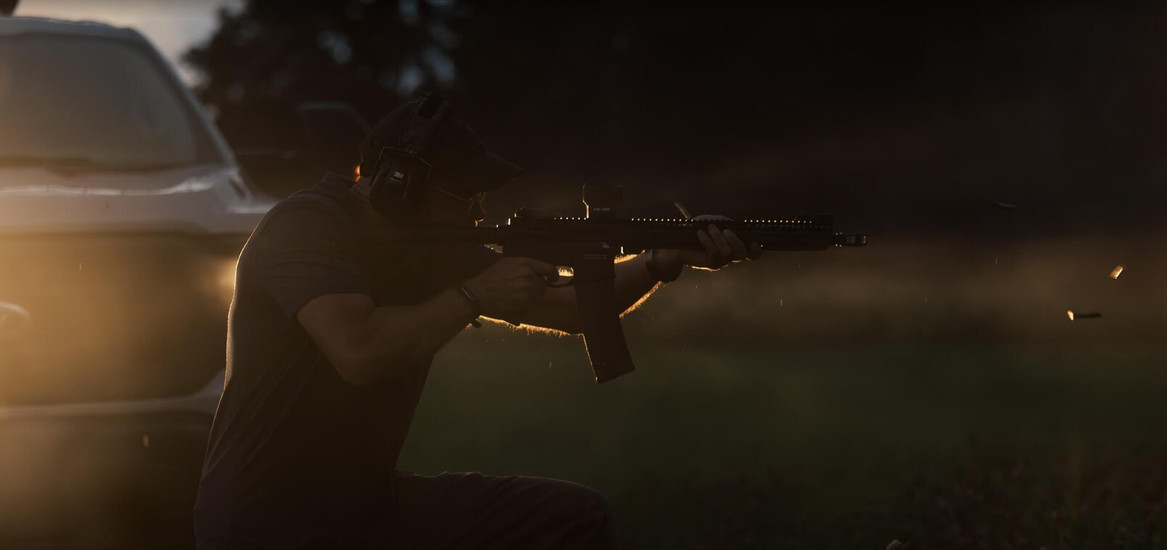
When comparing 3/8" vs. 1/2" AR500 steel targets, 3/8" AR500 is the best all-around thickness for most handgun shooters and common short-action rifle cartridges through .308 Win and 6.5 Creedmoor on properly rated Shoot Steel targets. Move up to 1/2" AR500 when you regularly shoot heavier rifle cartridges such as .30-06, 7mm Mag, .300 Win Mag or .338 Lapua Magnum, or when you want a heavier-duty target for high-volume use. Thicker does not automatically mean better. The right AR500 steel target thickness depends on caliber, velocity, distance, target design and how you plan to use it.
That distinction can save you money and a lot of unnecessary weight. A handgun shooter does not need to drag a 1/2" plate to the range simply because it is thicker. On the other hand, a shooter regularly running magnum rifle cartridges should not buy 3/8" AR500 and expect it to perform outside its rating.
Here is how to choose the right thickness before you buy.
3/8" vs. 1/2" AR500 Steel Targets at a Glance
| Factor | 3/8" AR500 | 1/2" AR500 |
|---|---|---|
| Best Use | Handguns and common short-action rifles | Heavier rifle cartridges and demanding range use |
| 9mm | Excellent | More thickness than most shooters need |
| .223 / 5.56 | Excellent when used at proper distance | Excellent when used at proper distance |
| .308 / 6.5 Creedmoor | Rated on applicable Shoot Steel targets | Excellent |
| .30-06 / .300 Win Mag | Not the recommended choice | Designed for these heavier rifle applications |
| Weight | Lighter | About 33% heavier for the same plate size |
| Portability | Better | Heavier to transport and set up |
| Movement / Ring | More responsive with handgun impacts | More mass and less movement |
| Cost | Lower | Higher |
| Best Buyer | Most recreational pistol and rifle shooters | Magnum rifle shooters and high-volume ranges |
If you shoot 9mm, 5.56 and .308 and want one versatile target setup, 3/8" AR500 is usually the sweet spot. If your rifle collection includes .30-06, .300 Win Mag, 7mm Mag or other heavier cartridges, 1/2" AR500 becomes the better choice.
What Is the Difference Between 3/8" and 1/2" AR500?
Both thicknesses use AR500 abrasion-resistant steel. The major difference is simply the amount of material in the plate.
A 1/2" plate is one-third thicker than a 3/8" plate. With the same shape and dimensions, that also means roughly 33% more steel and approximately 33% more weight.
That extra mass gives the thicker target greater capability for heavier rifle cartridges, but it also affects how the target behaves.
- 3/8" targets are easier to carry and set up.
- 3/8" hanging targets generally move more when struck.
- 1/2" targets absorb more energy before moving.
- 1/2" plates place more weight on stands, chains and mounting hardware.
- 1/2" AR500 opens the door to cartridges outside the rating of Shoot Steel's 3/8" line.
The goal is not to buy the most steel possible. It is to buy enough steel for the rounds you actually intend to shoot.
Is 3/8" AR500 Enough for 9mm?
Yes. For 9mm, 3/8" AR500 is more than enough for most shooters.
Shoot Steel's 3/8" AR500 targets are rated for centerfire handgun cartridges when used at their specified minimum distances. Standard 9mm is well within the intended use of these targets.
For a handgun-focused range, 3/8" has several practical advantages over 1/2":
- Less weight to carry to and from the range
- Easier setup
- More noticeable movement on hanging targets
- Excellent audible feedback
- Lower cost than comparable 1/2" targets
- Additional rifle capability if you expand your range later
If you primarily shoot 9mm, .40 S&W or .45 ACP, spending more just to get a thicker plate usually does not improve the training experience.
What About High-Volume Pistol Shooting?
A commercial range, firearms instructor or competition facility may choose heavier targets because they see far more rounds than the average recreational shooter. Even then, the entire target system matters. Plate design, mounting hardware and ease of replacement should be considered along with thickness.
Can 3/8" AR500 Handle .223 and 5.56?
Yes, appropriately rated Shoot Steel 3/8" AR500 steel targets can handle .223 and 5.56 when used at the required distance.
Velocity matters heavily with these cartridges. Shoot Steel's current 3/8" AR500 gong guidance specifies:
- Rifle at or below 3,000 fps muzzle velocity: 100 yards minimum
- Rifle above 3,000 fps muzzle velocity: 200 yards minimum
This is an important reason not to assume thicker steel automatically lets you move closer. A high-velocity 5.56 projectile can damage target steel if you ignore the required distance, regardless of whether you bought a heavier plate.
For the average AR-15 shooter who also shoots handguns, 3/8" AR500 offers an excellent balance between rifle capability and portability.
Is 3/8" AR500 Enough for .308?
Yes, on Shoot Steel targets specifically rated for .308 Win.
Shoot Steel's 3/8" AR500 gongs and many static target systems are rated for short-action rifle cartridges through .308 Win and 6.5 Creedmoor. On applicable products, the minimum rifle distance is 100 yards at or below 3,000 fps muzzle velocity.
That means a shooter running:
- 9mm
- .223 Rem
- 5.56 NATO
- .308 Win
- 6.5 Creedmoor
can build a highly versatile range around 3/8" AR500 without automatically needing a 1/2" plate.
When Do You Need 1/2" AR500?
The case for 1/2" AR500 steel targets becomes much stronger when you move beyond common short-action rifle cartridges.
Shoot Steel's 1/2" AR500 targets are built for significantly heavier rifle use, with applicable products rated for cartridges including:
- 7mm Remington Magnum
- .30-06 Springfield
- .300 Winchester Magnum
- .338 Winchester Magnum
- .338 Lapua Magnum
- .45-70 Government
Minimum shooting distance varies by cartridge. For example, Shoot Steel's current cartridge guidance lists .30-06 Springfield at 100 yards or more with 1/2" AR500, while .300 Win Mag, 7mm Rem Mag and .338 Lapua Magnum require 200 yards or more.
That makes 1/2" AR500 the better choice when you want one target that can cover a broader range of full-power rifle cartridges.
It also makes sense for:
- Permanent rifle ranges where portability is not important
- High-volume rifle training
- Range owners serving shooters with many different cartridges
- Hunters practicing with full-power hunting rifles
- Long-range shooters using magnum cartridges
Does 1/2" AR500 Last Longer Than 3/8"?
It can in the right application, but thickness alone does not determine target life.
The front surface of a steel target takes the impact. If you damage that surface with excessive velocity, an inappropriate projectile or shooting too close, simply having another 1/8" of steel behind it does not undo that damage.
Target life is affected by:
- Projectile velocity
- Bullet construction
- Cartridge energy
- Shooting distance
- Steel hardness
- Target thickness
- Volume of fire
- Target mounting
A properly used 3/8" AR500 target can deliver a very long service life with cartridges inside its rating. A poorly used 1/2" plate can still become damaged.
Buy the right thickness, then stay within its caliber and distance limits.
Does a Thicker Steel Target Let You Shoot Closer?
No. Do not use target thickness as permission to reduce shooting distance.
This is one of the biggest mistakes shooters make when comparing AR500 target thickness.
Many Shoot Steel 3/8" and 1/2" targets share similar basic distance requirements for cartridges that fall within both products' ratings. For example, standard centerfire handguns commonly require at least 10 yards, while common rifles typically require substantially more distance.
Minimum distance exists for more than preventing the plate from bending. It also affects bullet fragmentation, shooter safety and target surface life.
Always use the minimum distance published for the exact Shoot Steel target and cartridge you are using.
3/8" AR500 Is Better for Portable Target Setups
If you regularly load your targets into a truck, carry them downrange, move them between bays or set up a temporary range, weight matters quickly.
Because steel weight scales directly with thickness, the same 1/2" plate contains about one-third more steel than its 3/8" equivalent.
That extra weight becomes especially noticeable with:
- 10" and 12" gongs
- Large silhouettes
- Multiple-target packages
- Portable stands
- Training setups that are frequently moved
If your cartridges fall within the rating of a 3/8" target, the lighter plate often makes the overall system easier to transport and use.
That is why 3/8" AR500 is such a strong choice for recreational shooters using both handguns and common rifles.
When Should You Consider AR550 Instead?
There is another option once your use becomes more demanding: Hardox® AR550 steel targets.
AR550 has greater hardness than AR500 and is designed to provide additional resistance to pitting and surface wear. Shoot Steel uses premium Swedish Hardox® steel in select AR550 targets manufactured for demanding rifle applications.
Consider an appropriately rated Hardox® AR550 target when:
- You regularly shoot powerful rifle cartridges
- You have a high-volume commercial or training range
- High-velocity rifle use is a major part of your shooting
- Resistance to surface wear is more important than portability
- You want a premium heavy-duty rifle target
Do not assume AR550 automatically means you can shoot closer. AR550 products still have cartridge, velocity and distance requirements that must be followed.
What About Target Movement and Sound?
Thickness changes more than durability. It changes how a target reacts when hit.
A lighter 3/8" gong generally moves more from a handgun impact than the same-size target made from 1/2" steel. That can produce more obvious visual movement and a satisfying audible response.
A heavier 1/2" gong has more mass. That is beneficial when handling higher-energy rifle rounds but is not necessarily an advantage when shooting 9mm.
This is another reason to avoid automatically buying the thickest target available. For handgun shooting, a more responsive target can actually provide a better shooting experience.
Which AR500 Thickness Gives You the Best Value?
For most recreational shooters, 3/8" AR500 provides the best combination of price, durability, portability and caliber versatility.
Think about your current firearms rather than the cartridges you might theoretically shoot someday.
- Mostly 9mm, .40 S&W or .45 ACP: Buy 3/8" AR500.
- 9mm plus .223/5.56: Buy 3/8" AR500 rated for rifle use.
- 9mm, 5.56 and .308: 3/8" AR500 remains an excellent all-around choice on properly rated targets.
- Regular .30-06 shooting: Move to 1/2" AR500.
- .300 Win Mag or 7mm Mag: Choose an appropriately rated 1/2" AR500 or Hardox® AR550 target.
- .338 Lapua Magnum: Use a Shoot Steel target specifically rated for .338 Lapua Magnum and follow the required minimum distance.
- Portable range: Choose 3/8" whenever its rating meets your needs.
- Permanent or high-volume rifle range: Consider 1/2" AR500 or Hardox® AR550.
Safety Rules Apply to Both Thicknesses
Whether you choose 3/8" or 1/2" AR500, the same fundamentals of steel target safety apply.
- Follow the target-specific minimum distance. Do not assume all AR500 targets have the same rating.
- Use appropriate ammunition. Do not use steel-core, armor-piercing or tracer ammunition on Shoot Steel AR500 targets.
- Inspect the strike face. Increase distance if you begin seeing pitting and remove severely cratered or damaged targets from service.
- Mount the target correctly. Use the hanger, stand or mounting system as designed.
- Shoot the intended target face. Avoid shooting across steel from extreme side angles.
- Wear eye and ear protection. Bullet fragmentation is part of shooting steel and proper protective equipment is essential.
Common Mistakes When Choosing AR500 Target Thickness
- Assuming thicker is automatically better. Extra steel adds weight and cost you may not need.
- Buying 1/2" AR500 for 9mm simply because it sounds more durable. 3/8" AR500 is already an excellent handgun target thickness.
- Assuming all rifles require 1/2" steel. Applicable 3/8" Shoot Steel targets are rated through .308 Win and 6.5 Creedmoor.
- Shooting a magnum rifle at 3/8" steel. Move to the target thickness and grade rated for your cartridge.
- Assuming 1/2" lets you shoot closer. Thickness does not eliminate minimum-distance requirements.
- Ignoring velocity. Fast rifle rounds can be extremely demanding on a target even when the projectile is relatively small.
- Forgetting about weight. A target that stays in your garage because it is miserable to move is not a useful range setup.
- Choosing thickness without checking the product rating. Target design matters in addition to plate thickness.
Bottom Line: Which Thickness Should You Buy?
If you are still asking, "What thickness AR500 target do I need?", start with the cartridges you shoot most often.
Choose 3/8" AR500 if your range is primarily handgun, .223/5.56, .308 Win or 6.5 Creedmoor and the specific target is rated for those cartridges. It is lighter, easier to move, more responsive and capable enough for the majority of recreational shooters.
Choose 1/2" AR500 if you regularly shoot heavier rifle cartridges such as .30-06, 7mm Mag, .300 Win Mag or other cartridges that fall outside the rating of 3/8" AR500. It is also a strong choice for permanent and high-volume rifle ranges where added weight is less of a concern.
Consider Hardox® AR550 when you want a premium target for demanding, high-velocity or magnum rifle use.
The best steel target is not automatically the thickest. It is the target that is properly rated for your ammunition, fits the way you use your range and gives you the durability you need without adding unnecessary cost and weight.
Frequently Asked Questions
Is 3/8" AR500 thick enough for 9mm?
Yes. 3/8" AR500 is an excellent choice for 9mm and other common centerfire handgun cartridges. For most handgun shooters, moving to 1/2" adds unnecessary weight without providing a meaningful advantage.
Can 3/8" AR500 handle 5.56?
Yes, on Shoot Steel targets rated for rifle use. Current 3/8" AR500 products commonly require at least 100 yards for rifles at or below 3,000 fps muzzle velocity and 200 yards above 3,000 fps. Always follow the rating for the specific target.
Can you shoot .308 at 3/8" AR500?
Yes. Many Shoot Steel 3/8" AR500 targets are rated for short-action rifle cartridges through .308 Win and 6.5 Creedmoor when used at the required minimum distances.
Do I need 1/2" AR500 for .308?
Not necessarily. Properly rated 3/8" Shoot Steel targets can handle .308 Win. Moving to 1/2" may make sense for heavier-duty use, but it is not required simply because you shoot .308.
What thickness AR500 should I use for .30-06?
Shoot Steel recommends 1/2" AR500 for .30-06 Springfield. Current cartridge guidance lists a minimum distance of 100 yards or more for .30-06 on appropriately rated 1/2" AR500 targets.
What thickness steel target should I use for .300 Win Mag?
Use an appropriately rated 1/2" AR500 or Hardox® AR550 target. Shoot Steel's current cartridge guide lists 1/2" AR500 for .300 Win Mag with a minimum distance of 200 yards or more.
Is 1/2" AR500 better than 3/8" AR500?
Not universally. 1/2" AR500 supports more demanding rifle applications, but it is also heavier and generally more expensive. For handguns and common short-action rifles, 3/8" is often the better balance of capability, weight and value.
Does 1/2" AR500 last longer?
It can provide additional durability in demanding applications, but target life depends heavily on caliber, impact velocity, ammunition, shooting distance and steel hardness. Proper use is more important than simply choosing the thickest plate.
Can I shoot a 1/2" steel target from closer than a 3/8" target?
Not simply because it is thicker. Always follow the minimum distance specified for the exact target and cartridge. Extra thickness does not eliminate safe-distance requirements.
How much heavier is 1/2" AR500 than 3/8" AR500?
For two plates with the same dimensions and steel density, a 1/2" plate contains about 33% more material than a 3/8" plate and therefore weighs about 33% more.
Is 3/8" or 1/2" AR500 better for a portable range?
3/8" is generally better for portable setups when its caliber rating meets your needs. The lower weight makes targets easier to transport, carry downrange and mount.
When should I buy AR550 instead of AR500?
Consider an appropriately rated Hardox® AR550 target for demanding rifle applications, high-volume ranges and shooters who want increased resistance to surface wear and pitting. Follow the caliber and distance requirements for the specific AR550 product.