
How Far Away Should You Shoot Steel Targets? Safe Distances by Caliber
14th Jul 2026
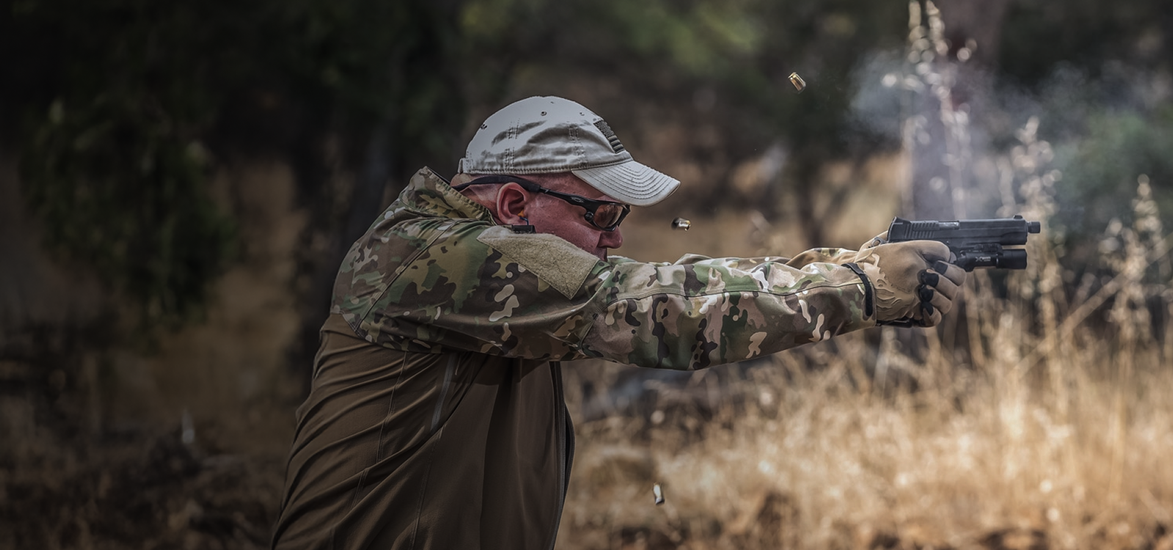
How far away should you shoot steel targets? For many Shoot Steel targets, standard centerfire handguns such as 9mm should be fired from at least 10 yards, rifles such as .223/5.56 and .308 generally require at least 100 yards, and higher-velocity or magnum rifle cartridges may require 150 to 200 yards or more. There is no single safe distance for every steel target. Target thickness, steel grade, projectile construction, muzzle velocity and the specific target's rating all matter, so always follow the distance requirements listed for the target you are shooting.
Caliber is only part of the equation. A relatively small .223 or 5.56 projectile moving at high velocity can be harder on a steel target than a much larger, slower-moving handgun bullet. That is why understanding steel target shooting distance requires looking at both the cartridge and how fast the bullet is moving when it reaches the plate.
Use the guide below as a starting point for Shoot Steel targets, then confirm the specifications for your exact target before shooting.
Steel Target Safe Distance by Caliber
| Caliber / Application | Typical Shoot Steel Minimum | What to Know |
|---|---|---|
| 9mm | 10 yards | Use a handgun-rated AR500 or AR550 target and approved ammunition. |
| .40 S&W / .45 ACP | 10 yards | Standard centerfire handgun guidance on applicable Shoot Steel targets. |
| Magnum Handguns | 25 yards or more | Higher energy requires additional distance. |
| .223 / 5.56 | 100 yards minimum on applicable rifle-rated targets | High muzzle velocity is especially important. Some loads and target designs require more distance. |
| .308 Win | 100 yards minimum on applicable targets | Use a target specifically rated for .308 Win. |
| 6.5 Creedmoor | 100 yards minimum on applicable targets | Confirm target rating and muzzle velocity before shooting. |
| High-Velocity Rifles | 150 to 200+ yards depending on target | Follow the velocity threshold published for the specific target. |
| Long-Action / Magnum Rifles | 200 yards or more | Use only targets specifically rated for the cartridge being fired. |
These distances are not universal specifications for every steel target. Shoot Steel products have individual caliber, velocity and distance ratings. Check the product page for your exact target before firing.
How Far Away Should You Shoot Steel Targets With 9mm?
For standard centerfire handgun ammunition such as 9mm, .40 S&W and .45 ACP, 10 yards is the minimum distance for many Shoot Steel AR500 targets.
That makes quality steel especially useful for handgun training. At appropriate distances, shooters can run draws, controlled pairs, transitions and other drills while receiving immediate visual and audible feedback.
However, being 10 yards away does not automatically make every steel setup safe. The target must also be:
- Rated for centerfire handgun use
- Free from excessive pitting and cratering
- Mounted according to its instructions
- Used with appropriate ammunition
- Positioned so bullet fragments are directed into a safe area
If you are using a magnum handgun, increase your distance. Shoot Steel recommends 25 yards or more for magnum handgun cartridges.
How Far Away Should You Shoot Steel With .223 or 5.56?
For rifle-rated Shoot Steel targets, 100 yards is generally the starting minimum for .223 and 5.56. This is where velocity becomes extremely important.
It is easy to assume a smaller bullet should be easier on a target. That is not necessarily true. A 5.56 projectile can leave the muzzle at significantly higher velocity than a 9mm bullet, putting substantially different stress on the target face.
Many Shoot Steel 3/8" AR500 products use the following rifle guidance:
- At or below 3,000 fps muzzle velocity: 100 yards minimum
- Above 3,000 fps muzzle velocity: 200 yards minimum
That second threshold is important for .223 and 5.56 shooters. Different barrel lengths and ammunition loads can produce different velocities. Do not assume every 5.56 load belongs at exactly the same distance.
If your ammunition is above the target's stated velocity threshold, move back to the required distance.
How Far Away Should You Shoot .308 at Steel?
On Shoot Steel targets specifically rated for short-action rifles through .308 Win, 100 yards is commonly the minimum distance for .308.
For example, Shoot Steel's 3/8" AR500 Round Gong is rated for centerfire handguns and short-action rifle cartridges through .308 Win and 6.5 Creedmoor when used at the proper distances.
That does not mean every 3/8" plate from every manufacturer should be shot with .308. The steel grade, hardness, mounting method, plate design and manufacturer's rating all matter.
The safest buying approach is simple: choose a target that explicitly lists your cartridge in its rating instead of assuming the plate can handle it because it is labeled AR500.
When Should Rifle Distance Increase to 200 Yards?
There are two major reasons to increase your rifle distance: higher velocity and higher-energy cartridges.
Many Shoot Steel 3/8" AR500 targets require 200 yards when rifle muzzle velocity exceeds 3,000 fps. Magnum and long-action rifle cartridges can also require 200 yards or more depending on the target.
This is why cartridge name alone is not enough. Before shooting steel with a rifle, know:
- The cartridge
- Approximate muzzle velocity of the load
- Projectile construction
- Target steel grade
- Target thickness
- Maximum caliber rating
- Manufacturer's minimum distance
If you do not know whether your load falls above or below a target's velocity threshold, use the ammunition manufacturer's published velocity as a reference and choose the more conservative distance when in doubt.
What About Magnum Rifles?
Magnum rifles require a target designed for substantially more demanding impacts. This is where heavier AR500 and Hardox® AR550 targets become important.
Shoot Steel's 1/2" Hardox® AR550 target line includes products rated for powerful rifle cartridges when used at the required distances. On applicable Hardox® AR550 targets, current guidance includes:
- Rifle under 2,800 fps: 100 yards minimum
- Rifle over 2,800 fps: 150 yards minimum
- Long-action rifles: 200 yards minimum
Other Shoot Steel AR550 products designed for cartridges up to .338 Lapua Magnum specify 200 yards or more for rifle use.
Do not apply an AR500 distance chart to an AR550 target or vice versa. Always use the specifications published for the exact product.
Does AR500 vs. AR550 Change Safe Shooting Distance?
Potentially, but hardness alone does not determine the correct distance.
AR550 is harder than AR500 and can offer greater resistance to pitting under demanding rifle use. That does not mean you should automatically move closer simply because your target is AR550.
Safe distance is based on the complete system:
- Steel grade
- Plate thickness
- Caliber
- Velocity
- Projectile type
- Target geometry
- Mounting system
- Condition of the strike face
The product rating is more useful than a generic rule such as "AR550 can be shot closer."
Does Steel Target Thickness Change Shooting Distance?
Not necessarily. This is one of the most common misunderstandings about AR500 target shooting distance.
A 1/2" target is heavier and may be rated for cartridges that a 3/8" target is not, but extra thickness does not automatically make it appropriate to shoot from closer distances.
Shoot Steel recommends a 100-yard minimum for common centerfire rifle cartridges such as .223/5.56 on applicable 3/8" and 1/2" AR500 targets.
Choose thickness based on the cartridges you want to shoot and the target's rating. Choose shooting distance based on the manufacturer's guidance for that target and ammunition combination.
How Should Steel Targets Be Angled?
A good steel target system is designed to manage bullet fragmentation after impact. Many static systems position the target with a slight downward angle, while hanging targets naturally move when struck.
The goal is not to randomly lean a plate forward. Mount the target according to the design of the hanger or stand.
Proper mounting helps:
- Direct fragments toward the ground
- Allow the target to react correctly to impact
- Reduce stress on mounting hardware
- Keep the intended strike face positioned toward the shooter
Also avoid firing at steel from extreme side angles. Shoot perpendicular to the intended target face unless the target manufacturer specifies otherwise.
What Ammo Can You Shoot at Steel Targets?
Quality conventional lead-core ammunition is commonly used on properly rated Shoot Steel targets. Certain projectile types should not be used.
Do not shoot Shoot Steel AR500 or AR550 targets with:
- Steel-core ammunition
- Armor-piercing ammunition
- Tracer ammunition
For shooters asking, "Can you shoot FMJ at steel targets?" conventional lead-core FMJ ammunition is generally appropriate when the target is rated for the caliber and all distance requirements are followed. The important distinction is what is inside the projectile, not simply whether the bullet is labeled FMJ.
Be especially careful with ammunition such as 5.56 green tip. Do not assume ammunition is appropriate for steel based on caliber alone. Confirm projectile construction before shooting.
Why Target Condition Can Change the Safe Distance
A flat steel strike face behaves differently than a cratered one.
Repeated impacts, excessive velocity or improper ammunition can create pitting and cratering. Those irregular surfaces can change how bullet fragments behave when another round hits the plate.
Inspect your targets before every shooting session and periodically while shooting.
Watch for:
- Cratering
- Deep pitting
- Bending or deformation
- Damaged mounting holes
- Loose hardware
- Damaged hangers or stands
If you begin seeing pitting during rifle use, increase your distance. If the plate develops severe pitting or cratering, remove it from service.
Repainting your targets regularly also makes new impacts easier to see and helps you monitor the condition of the strike face.
Do Gongs, Silhouettes and Reactive Targets Use the Same Distance?
Not always.
A 3/8" AR500 gong and a 3/8" AR500 silhouette may have similar ratings, but reactive systems can have different limitations because they include paddles, springs, pivots or other moving components.
Before shooting any steel target, check the rating for the complete target system, not just the thickness of the plate.
This is especially important with:
- Dueling trees
- Texas Stars
- Plate racks
- Spinners
- Knock-down targets
- Spring-mounted targets
A target constructed from 3/8" AR500 does not automatically have the same rifle rating as every other 3/8" AR500 product.
Common Steel Target Safety Mistakes
- Using one distance for every caliber. 9mm and 5.56 should not automatically be shot from the same distance.
- Looking only at caliber. Rifle velocity can be just as important as bullet diameter or cartridge name.
- Assuming thicker means you can shoot closer. A 1/2" plate still needs to be used at its published minimum distance.
- Assuming AR550 eliminates distance requirements. Harder steel still has caliber and distance limits.
- Shooting damaged steel. Pitting and cratering change the target surface and should never be ignored.
- Using prohibited ammunition. Steel-core, armor-piercing and tracer ammunition can damage targets.
- Improvising the mounting angle. Use the hanger or stand as designed.
- Ignoring target-specific ratings. A gong, spinner and Texas Star can use the same steel thickness while having different ratings.
- Moving closer because the target "looks fine." Stay at or beyond the manufacturer's minimum distance.
Choosing the Right Steel Target for Your Caliber
If you mostly shoot 9mm and other common handguns, a 3/8" AR500 target is a versatile choice that gives you plenty of handgun capability while leaving room for rifle use on applicable products.
If your range regularly sees .223, 5.56, .308 or 6.5 Creedmoor, choose a rifle-rated AR500 target and pay close attention to muzzle velocity and minimum distance.
If you shoot long-action or magnum rifle cartridges, step up to a target specifically engineered and rated for those rounds. Shoot Steel's heavier AR500 and Hardox® AR550 options are designed for more demanding applications.
The most important rule is simple: match the target to the cartridge instead of trying to make one generic distance rule fit every target.
Shop Steel Targets by Application
Frequently Asked Questions
How far away should you shoot steel targets?
For many Shoot Steel targets, standard centerfire handguns require at least 10 yards, common centerfire rifles require at least 100 yards, and higher-velocity or magnum rifles may require 150 to 200 yards or more. Always follow the minimum distance listed for your specific target.
How far away should you shoot 9mm at steel?
Shoot Steel specifies a 10-yard minimum for standard centerfire handgun cartridges such as 9mm on applicable targets. The target must also be properly mounted, in good condition and rated for handgun use.
How far away should you shoot .45 ACP at steel?
Standard .45 ACP falls under centerfire handgun guidance, with a 10-yard minimum on applicable Shoot Steel targets. Always confirm the specific product rating before shooting.
How far away should you shoot 5.56 at AR500?
For applicable Shoot Steel AR500 rifle targets, 100 yards is the minimum for rifles at or below the target's stated velocity threshold. Many 3/8" AR500 Shoot Steel products require 200 yards when muzzle velocity exceeds 3,000 fps.
How far away should you shoot .223 at a steel target?
Use at least 100 yards on a Shoot Steel target specifically rated for .223 and confirm the ammunition's velocity. If the load exceeds the target's published velocity threshold, additional distance may be required.
How far away should you shoot .308 at steel?
Many Shoot Steel rifle-rated AR500 targets specify a 100-yard minimum for .308 Win. Only use a target that is explicitly rated for .308 and follow the specifications for that product.
How far away should you shoot a magnum rifle at steel?
Magnum and long-action rifle cartridges commonly require 200 yards or more and need a target specifically rated for those cartridges. Some Shoot Steel Hardox® AR550 targets are designed for magnum rifle use, but ratings vary by product.
Does AR550 let you shoot steel from closer distances?
Not automatically. AR550 offers increased hardness, but minimum distance still depends on caliber, velocity, target thickness, target design and the manufacturer's rating. Follow the instructions for the exact AR550 target you are using.
Does thicker steel mean you can shoot closer?
No. A thicker plate may handle more demanding cartridges, but thickness does not override the target's minimum shooting distance. Shoot Steel lists specific distance requirements for each target and application.
Can you shoot FMJ at steel targets?
Conventional lead-core FMJ ammunition can generally be used on an appropriately rated Shoot Steel target when all distance requirements are followed. Do not use steel-core, armor-piercing or tracer ammunition.
Can you shoot green tip 5.56 at steel targets?
Do not assume green tip or any other specialty projectile is safe for a steel target simply because the caliber is rated. Confirm projectile construction first and do not use steel-core or armor-piercing ammunition on Shoot Steel targets.
Should steel targets be angled down?
Many steel target systems are designed to present the plate with a slight downward angle or allow the plate to move when struck, helping direct fragmentation toward a safer area. Use the target's mounting system exactly as designed instead of creating an improvised angle.
What should I do if my steel target starts pitting?
Increase your shooting distance if you observe pitting. Targets with severe pitting, cratering, deformation or other significant strike-face damage should be removed from service.