
Best Steel Targets for 9mm: What Thickness and Target Style Should You Buy?
7th Jul 2026
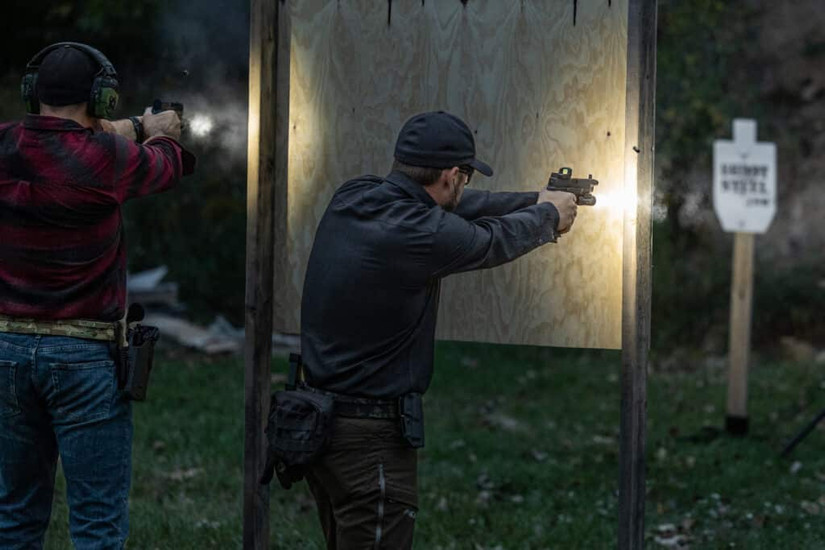
For most shooters, the best steel targets for 9mm are 3/8" AR500 targets. They easily handle common centerfire handgun cartridges while giving you more versatility than a thinner pistol-only plate if you also want to shoot rifles at longer distances. For a basic range, start with an 8" to 12" gong or static target. For faster handgun training, move to silhouettes, dueling trees, plate racks or a Texas Star. With 9mm, target style usually matters more than stepping up to 1/2" steel.
That last point is important. If you are shopping for 9mm steel targets, buying the thickest plate available does not automatically give you the best target. A 1/2" plate adds weight and makes sense for certain rifle applications, but most 9mm shooters will get more value from choosing the right target size, mounting system and reactive design.
Here is how to choose the right setup based on the way you actually shoot.
What Are the Best Steel Targets for 9mm?
For a shooter who wants one target that can cover most range sessions, 3/8" AR500 is the best all-around choice for 9mm. It gives you the durability needed for centerfire handguns without the unnecessary weight of a 1/2" target.
It also gives you room to expand. Shoot Steel's 3/8" AR500 targets are available in designs rated not only for centerfire handguns, but also for short-action rifle cartridges on applicable products when used at the required longer distances.
For most shooters, we recommend:
- Best all-around thickness: 3/8" AR500
- Best first target: 8", 10" or 12" gong or static plate
- Best for defensive handgun drills: Silhouette or A-zone style targets
- Best for transitions: Multiple static plates or a dueling tree
- Best for advanced reactive training: Texas Star or plate rack
- Best for portability: Target package with an integrated stand or T-post mounting system
If your range will be used almost exclusively for 9mm, .40 S&W and .45 ACP, there is usually no practical need to jump to 1/2" steel just because it is thicker.
3/8" vs. 1/2" AR500 for 9mm
One of the most common questions is: What thickness steel target do I need for 9mm?
For dedicated handgun use, even thinner AR500 plates can handle standard pistol cartridges when the product is designed for them. But 3/8" AR500 has become the more versatile choice because you are not locking yourself into a pistol-only setup.
| Feature | 3/8" AR500 | 1/2" AR500 |
|---|---|---|
| 9mm Use | Excellent choice | More steel than most 9mm shooters need |
| Weight | Lighter and easier to move | Heavier |
| Handgun Training | Ideal | Ideal, but usually unnecessary |
| Rifle Versatility | Works with applicable short-action rifle cartridges at proper distances | Better suited to heavier-duty applications |
| Portability | Better | More difficult to move |
| Best For | 9mm, general handgun use and mixed pistol/rifle ranges | Heavier-duty and higher-energy applications |
If 9mm is your primary caliber, spend the money on a better target system instead of simply buying thicker steel. A 3/8" AR500 silhouette, dueling tree or reactive target will usually add more training value than replacing the same basic plate with a heavier 1/2" version.
Is AR500 Good for 9mm?
Yes. AR500 is an excellent material for 9mm steel targets because its hardness allows conventional handgun bullets to fragment against the surface rather than deeply deforming the target when the plate is used properly.
That hardness is also why you should use actual abrasion-resistant target steel instead of mild steel. Mild steel can become cratered or deformed under repeated impacts. Once the strike face is no longer flat and predictable, it should not continue to be used as a shooting target.
Shoot Steel's 3/8" targets are CNC laser-cut from domestic AR500 steel and manufactured in the United States. The result is a durable target surface built for repeated use with common handgun calibers such as 9mm.
Which 9mm Steel Target Style Should You Buy?
The best target style depends on what you want to practice. A shooter working on slow-fire accuracy needs a very different target from someone practicing transitions, competition stages or defensive handgun drills.
Round Gongs: Best First Steel Target
A round gong is hard to beat as a first AR500 target for 9mm. It is simple, durable and versatile.
Shoot Steel offers 3/8" AR500 round gongs in multiple diameters, allowing you to scale the target's difficulty to the drill.
- 4" to 6": Precision-focused handgun practice
- 8": Excellent general-purpose 9mm target
- 10" to 12": Faster shooting, transitions and general range use
- Larger gongs: Greater visibility or longer-distance shooting
Gongs also give you immediate audible feedback. You know when you hit without walking downrange to check a paper target.
Silhouette Targets: Best for Practical Pistol Training
If your 9mm training is focused on defensive shooting, law enforcement drills or practical handgun skills, a silhouette gives you a more useful target shape than a simple round plate.
Silhouettes allow shooters to work:
- Draw-to-first-shot drills
- Controlled pairs
- Target transitions
- Movement drills
- Shot placement
- Timed handgun strings
They also pair well with smaller A-zone or precision targets when you want to alternate between a large strike area and a more demanding aiming point.
Dueling Trees: Best for Fast Transitions
A dueling tree puts multiple reactive paddles into a compact target system. Hit a paddle and it moves to the opposite side, giving you visual confirmation along with the sound of the impact.
For an individual shooter, that makes it useful for fast target transitions and keeping your eyes moving. With two shooters, the same system becomes a head-to-head challenge.
For shooters who already own basic static targets, a dueling tree is one of the easiest ways to make 9mm target practice more dynamic.
Shop the 6-Paddle Dueling Tree
Texas Star: Best for Advanced Reactive Training
The Texas Star adds something a static plate cannot: changing movement after the first hits.
Shoot Steel's Texas Star uses five 8" paddles made from 3/8" domestic AR500 steel. As paddles are knocked off, the weight distribution changes and the remaining targets rotate around the hub.
That forces the shooter to:
- Track a moving target
- Control shot timing
- Transition quickly
- Maintain visual discipline
- Adapt when the target does not move exactly as expected
For competition practice or shooters who have already mastered basic static steel, it is a major step up in difficulty.
How Far Away Should You Shoot 9mm at Steel?
For Shoot Steel centerfire handgun targets, 10 yards is the minimum shooting distance for standard centerfire handgun use unless the specific product states otherwise.
Distance is only one part of shooting steel safely. Proper target condition, mounting and ammunition are equally important.
- Stay at or beyond the minimum distance listed for your specific target.
- Always wear quality eye and ear protection.
- Inspect the strike face before shooting.
- Do not shoot steel with severe pitting or cratering.
- Inspect hangers, stands and mounting hardware before each session.
- Allow hanging targets to move as designed.
- Follow the mounting instructions for the specific target system.
- Keep the shooter positioned square to the intended target face rather than firing across it from an extreme side angle.
A properly designed steel setup manages bullet fragmentation by presenting a hard, flat surface and directing fragments into a safer area. Do not improvise target angles or mounting methods that differ from the manufacturer's instructions.
What Ammo Can You Shoot at 9mm Steel Targets?
Standard lead-core 9mm ammunition is the normal choice for quality AR500 pistol targets. The ammunition you should avoid is just as important.
Do not use steel-core, armor-piercing or tracer ammunition on Shoot Steel AR500 targets.
If you are unsure what projectile is loaded in a particular cartridge, confirm the ammunition type before shooting it at steel.
Also remember that caliber alone does not determine how hard a round is on a target. Bullet construction, velocity, impact energy and distance all matter.
What if You Also Shoot 5.56 or .308?
This is where buying 3/8" AR500 instead of a dedicated lightweight handgun plate starts to make even more sense.
Many Shoot Steel 3/8" AR500 static targets and gongs are rated for short-action rifle cartridges when used at the proper rifle distances. For example, Shoot Steel's 3/8" AR500 Round Gong is rated for centerfire handguns and short-action rifles through .308 Win and 6.5 Creedmoor.
The required distances change significantly when you move from 9mm to rifles:
- 9mm and centerfire handguns: 10 yards minimum on applicable Shoot Steel targets
- Rifles at or below 3,000 fps muzzle velocity: 100 yards minimum on applicable targets
- Rifles above 3,000 fps muzzle velocity: 200 yards minimum on applicable targets
That means one properly selected 3/8" AR500 target can serve as a close-range 9mm target one day and a 5.56 or .308 target at the appropriate rifle distance another day.
This versatility is one of the biggest reasons we recommend 3/8" AR500 as the starting point for shooters building a mixed-use range.
Static vs. Reactive Steel Targets for 9mm
If you are deciding where to put your money, think about how much movement and feedback you want from the target.
| Target Style | Best Use | Skill Level |
|---|---|---|
| Gong | General practice and accuracy | Beginner to advanced |
| Static Silhouette | Defensive and practical handgun drills | Beginner to advanced |
| Dueling Tree | Transitions and competition | Intermediate to advanced |
| Plate Rack | Speed, transitions and shot accountability | Intermediate to advanced |
| Texas Star | Moving-target and advanced transition training | Intermediate to advanced |
Common Mistakes When Buying 9mm Steel Targets
- Buying 1/2" steel because thicker sounds better. For dedicated 9mm use, added thickness usually means added weight without adding much practical value.
- Buying mild steel instead of AR500. The target material matters more than simply having a thick piece of steel.
- Ignoring the mounting system. Think about how often you will move the target and whether you want a gong, static mount, T-post system or complete stand.
- Buying a target that is too small for the drill. A 4" plate can be great for precision work but frustrating for rapid-fire training. Match the strike area to the skill you are practicing.
- Ignoring minimum distance. A target being rated for 9mm does not mean it should be shot from any distance.
- Shooting damaged steel. Severe craters and pitting are a reason to remove a plate from service, not proof that you should keep shooting it.
- Using the wrong ammunition. Do not use steel-core, armor-piercing or tracer ammunition.
- Buying only one target style. Once you have a basic gong or silhouette, adding reactive targets creates far more training variety than simply adding another identical plate.
Our Recommendation: Start With 3/8" AR500
If you want a straightforward answer, start with 3/8" AR500.
For a first 9mm setup, choose an 8", 10" or 12" round gong or a medium-size silhouette. That gives you a durable target that works for basic accuracy, draws, transitions and general handgun practice.
If you already have static steel, your next purchase should add a new training challenge. Look at a dueling tree, plate rack or Texas Star rather than simply buying a thicker version of the same target.
If you regularly switch between 9mm, 5.56 and .308, choose a 3/8" AR500 target specifically rated for those cartridges and follow the different minimum distances required for handgun and rifle use.
The best steel target setup for 9mm is not the heaviest target you can buy. It is a properly rated AR500 system that matches the drills you want to run, is easy enough to set up that you will actually use it and gives you room to make your range more challenging over time.
Frequently Asked Questions
What is the best steel target thickness for 9mm?
For most shooters, 3/8" AR500 is the best all-around thickness for 9mm. It easily handles common handgun calibers and gives you the flexibility to use applicable targets with short-action rifles at the required longer distances. A dedicated handgun shooter can use thinner properly rated AR500, but 3/8" provides greater versatility.
Can you shoot 9mm at AR500 steel?
Yes. Properly rated AR500 steel targets are an excellent choice for 9mm and other common centerfire handgun cartridges. Follow the target manufacturer's minimum-distance, ammunition and mounting requirements.
How far away should you shoot 9mm at a steel target?
Shoot Steel specifies a 10-yard minimum for centerfire handguns on its applicable AR500 targets. Always check the individual product because target-specific limits may apply.
Do I need 1/2" AR500 for 9mm?
Generally, no. A 1/2" AR500 plate will handle 9mm, but the additional thickness is unnecessary for most dedicated handgun setups. A 3/8" AR500 target is lighter and gives most 9mm shooters the durability and versatility they need.
What size steel target is best for 9mm?
An 8" to 12" target is a strong starting point for general handgun practice. Smaller plates increase difficulty for precision work, while larger targets are useful for faster shooting, transitions and drills where the target is positioned farther away.
Are gong targets good for 9mm?
Yes. Steel gong targets are one of the best choices for 9mm because they are simple, durable and provide immediate audible feedback. They are especially useful as a first steel target or as part of a multi-target range.
Is a dueling tree good for 9mm practice?
Yes. A properly rated dueling tree is excellent for practicing transitions, speed and shot accountability. The reactive paddles provide both visual and audible feedback and can also be used for two-shooter competitions.
Is a Texas Star good for 9mm?
Yes. Shoot Steel's AR500 Texas Star is designed for centerfire handgun use and is well suited to 9mm training within its stated velocity and energy limits. Its moving paddles make it especially useful for transition drills and competition practice.
Can I shoot 5.56 and .308 at the same target I use for 9mm?
Some 3/8" AR500 targets can be used with 9mm, 5.56 and .308 when the specific product is rated for those cartridges. Rifle minimum distances are substantially greater than handgun distances, so always follow the rating and distance requirements for the exact target.
What ammunition should I avoid when shooting steel?
Do not use steel-core, armor-piercing or tracer ammunition on Shoot Steel AR500 targets. Use ammunition appropriate for the target and inspect both the ammunition and target before shooting.
What is the best 9mm steel target for a beginner?
Start with a 3/8" AR500 round gong or static target in the 8" to 12" range. It is simple to use, provides instant feedback and gives you a versatile foundation that can later be expanded with silhouettes and reactive targets.