
Steel Targets vs. Paper Targets: Which Is Better for Shooting Practice?
28th Apr 2026
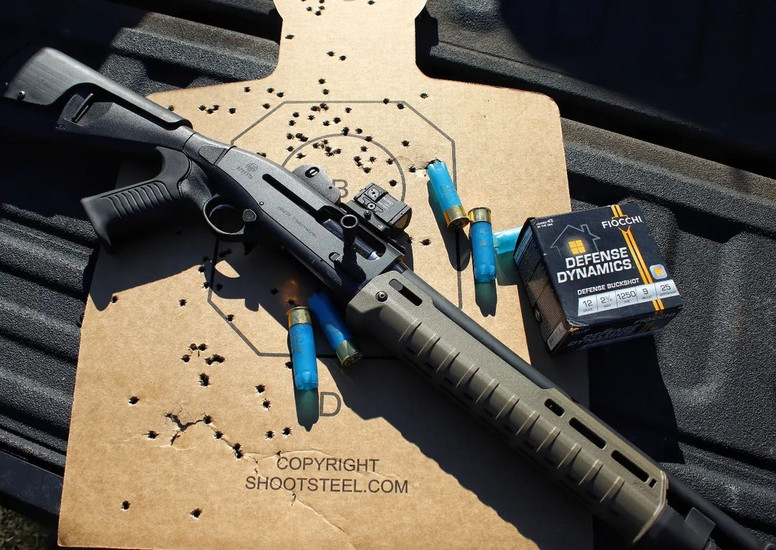
When comparing steel targets vs. paper targets, neither is better for every type of shooting practice. Paper targets are best for measuring groups, zeroing firearms and seeing exact shot placement. Steel targets are better for speed, transitions, reactive drills and high-volume shooting because they provide immediate audible and visual feedback and can be reused for thousands of impacts when used correctly. For the most complete range setup, use paper when you need to analyze where every bullet landed and steel when you need to know immediately whether you made the hit.
The difference comes down to what you are trying to learn. If you are testing a new rifle load at 100 yards, paper gives you information steel cannot. If you are running a 9mm transition drill across five targets, walking downrange to inspect holes after every string defeats the purpose.
Here is where each target type works best and when it makes sense to use both.
Steel Targets vs. Paper Targets at a Glance
| Training Factor | Steel Targets | Paper Targets |
|---|---|---|
| Upfront Cost | Higher | Lower |
| Long-Term Cost | Excellent for high-volume use | Recurring replacement cost |
| Reusable | Yes | Limited |
| Instant Feedback | Excellent | Limited at distance |
| Exact Shot Placement | Limited | Excellent |
| Measuring Groups | Poor | Excellent |
| Zeroing | Not ideal | Best choice |
| Speed Drills | Excellent | Useful but less immediate |
| Target Transitions | Excellent | Good |
| Long-Range Hit Confirmation | Excellent | Often requires spotting equipment |
| Safety Requirements | Requires caliber, ammo and distance rules | Fewer target-specific restrictions |
| Best Use | Reactive and high-volume training | Precision and shot analysis |
The simple answer is: paper tells you where you hit, while steel tells you immediately whether you hit.
Why Shoot Steel Targets?
The biggest advantage of steel shooting targets is immediate feedback. A bullet hits the plate, you hear the ring and, depending on the target design, you may also see the plate move, fall, swing or rotate.
That feedback changes the way you can train.
Instead of firing five rounds and stopping to inspect the target, you can stay focused on the drill. This is especially valuable when working on:
- Draw-to-first-shot speed
- Target transitions
- Multiple-target engagements
- Movement between shooting positions
- Timed pistol strings
- Competition practice
- Long-range hit confirmation
- High-volume recreational shooting
A quality AR500 target is also reusable. Rather than replacing a sheet of paper after every few strings, repaint the steel when needed and keep shooting.
Where Paper Targets Are Better
Steel gives you a hit or miss. Paper gives you the details.
If you need to know whether five shots produced a 1", 2" or 4" group, paper is the better tool. The same applies when adjusting sights or optics because you need to see exactly where the rounds are landing relative to your point of aim.
Paper shooting targets are the better choice for:
- Zeroing a rifle or handgun
- Measuring group size
- Testing different ammunition
- Evaluating point of impact
- Diagnosing consistent misses
- Slow-fire accuracy practice
- Recording scores or shot placement
If your rifle is grouping two inches left, steel will tell you whether those rounds still hit the plate. Paper tells you that the group needs to move two inches right.
That is why replacing paper entirely with steel is usually not the goal. The better approach is using each target where it gives you the most useful information.
Are Steel Targets Better for 9mm Practice?
For many types of 9mm training, steel is hard to beat.
Once your handgun is zeroed and you understand your basic point of impact, most practical 9mm practice is not about measuring tiny groups. It is about making accurate hits faster and under increasingly difficult conditions.
Steel works especially well for:
- Drawing from a holster
- Controlled pairs
- Transitioning between targets
- Shooting while moving
- Timed drills
- Competition practice
- Head-to-head shooting drills
For most general handgun shooting, 3/8" AR500 provides an excellent balance of durability, target response and versatility. Shoot Steel's 3/8" AR500 targets are manufactured from domestic AR500 steel and are available as gongs, static targets and complete systems.
Start with a gong or silhouette if you are new to steel. Once basic hits become easy, add smaller plates or reactive systems to make the drill harder.
Reactive Steel Changes the Training
A flat paper target remains exactly where it started no matter how well you shoot it. Reactive steel targets force you to deal with a changing problem.
Dueling Trees
A dueling tree uses multiple steel paddles that move from one side of the target to the other when hit. Shoot Steel's 6-Target Dueling Tree uses six 6" AR500 paddles and is built for handgun drills, transitions and head-to-head competition.
For an individual shooter, it encourages fast transitions and immediate correction. With two shooters, the same system becomes a competition where each hit changes what the other shooter has to do.
Shop the 6-Target Dueling Tree
Texas Stars
A Texas Star adds movement that becomes less predictable as the drill progresses. Shoot Steel's Texas Star uses five 8" AR500 paddles positioned around a rotating hub. As paddles are knocked off, the weight distribution changes and the remaining targets move.
That forces the shooter to track the target, control timing and adapt instead of simply moving the sights between stationary aiming points.
Paper is excellent for analyzing fundamentals. A Texas Star is excellent for finding out whether those fundamentals hold together when the target starts moving.
Steel vs. Paper for .223 and 5.56
For an AR-15 shooter, both target types deserve space on the range.
Use paper first when zeroing your rifle, confirming point of impact or testing ammunition. You need to see where every round lands.
Move to steel when the goal changes from measuring groups to making hits.
At 100 yards and beyond, the audible response of a steel gong makes rifle practice much more efficient. Instead of looking through a spotting scope after every shot, a solid hit produces immediate feedback.
Steel also allows you to spread several targets across the range and practice moving between different distances and target sizes.
Velocity is important when shooting rifles at steel. Shoot Steel recommends a minimum of 100 yards for centerfire rifles such as .223/5.56 on applicable targets, with greater distances required as velocity increases.
Steel vs. Paper for .308 and Long-Range Shooting
At longer distances, the strengths of steel become even more obvious.
A paper target at 300 or 500 yards can be excellent for precision measurement, but seeing individual bullet holes usually requires magnification or a trip downrange.
A large steel gong gives you immediate hit confirmation through sound and visible movement.
For a .308 shooter, a good training sequence is:
- Confirm zero and ammunition performance on paper.
- Move to a properly rated AR500 gong.
- Start with a larger target at distance.
- Reduce target size as consistency improves.
- Add multiple gongs at different distances for transitions and holds.
This combination gives you the precision data of paper and the efficiency of steel.
Do Steel Targets Save Money Over Time?
Paper wins on initial price. Steel can win on repeated use.
A paper target is inexpensive, but it is consumable. Targets, cardboard backers, staples, tape and replacement target stands add ongoing cost, especially for someone who shoots frequently.
An AR500 target costs more upfront, but a properly rated plate can handle thousands of impacts when used with the correct ammunition and at the correct distance.
This makes steel especially attractive for:
- Frequent recreational shooters
- Private ranges
- Competition shooters
- Firearms instructors
- Law enforcement training
- Commercial ranges
The more you shoot, the easier it becomes to justify a reusable target.
There are still wear items. Paint, straps, chains, bolts and other mounting hardware may need replacement over time. The steel plate itself should be inspected regularly for pitting, cratering or deformation.
Steel Target Safety Is Different From Paper
Steel adds capabilities that paper cannot provide, but it also requires additional safety considerations.
For Shoot Steel targets, current general guidance includes:
- Centerfire handguns: 10 yards minimum on applicable targets
- Magnum handguns: 25 yards or more
- Centerfire rifles: At least 100 yards on applicable targets
- High-velocity or magnum rifles: Increase distance according to the specific target rating
The target must also be mounted correctly. Hanging targets should be allowed to move as designed, while static and reactive systems should use the mounting configuration intended for that product.
Inspect steel before shooting. Severe pitting, cratering or deformation can change how fragments behave when a bullet hits the plate.
What Ammo Should You Avoid on Steel?
Do not assume every cartridge of a rated caliber is appropriate for a steel target. Projectile construction matters.
Follow the ammunition restrictions for your exact target and avoid prohibited ammunition such as:
- Steel-core ammunition
- Armor-piercing ammunition
- Tracer ammunition
Conventional lead-core FMJ ammunition can generally be used on properly rated Shoot Steel targets when all distance requirements are followed.
Which Target Is Better for Beginners?
Beginners benefit from both, but paper should usually come first when learning basic marksmanship.
Paper shows whether rounds are consistently low, left, right or spread across the target. That information can help identify problems with sight alignment, trigger control and consistency.
Once the shooter can reliably put rounds where intended, steel becomes extremely useful because the drill can shift from analyzing individual shots to producing consistent hits.
A simple progression might look like this:
- Learn fundamentals on paper.
- Confirm sight or optic zero.
- Move to a large steel gong.
- Add a second steel target for transitions.
- Reduce target size or increase distance.
- Add silhouettes or reactive targets.
- Use paper periodically to check precision and identify problems.
This creates a better training progression than treating either paper or steel as the only target you should use.
Best Targets by Type of Shooting Practice
- Zeroing a firearm: Paper
- Measuring groups: Paper
- Testing ammunition accuracy: Paper
- Diagnosing point-of-impact problems: Paper
- Slow-fire precision: Paper or both
- 9mm speed drills: Steel
- Draw-to-first-shot practice: Steel
- Target transitions: Steel
- High-volume recreational shooting: Steel
- Competition practice: Steel and paper
- Defensive handgun practice: Steel silhouettes and paper depending on the drill
- Long-range hit confirmation: Steel
- Long-range group measurement: Paper
- Best overall range: Both
Common Mistakes When Choosing Steel or Paper
- Trying to zero a rifle on a large steel plate. A hit does not tell you exactly how far the group is from your point of aim.
- Using paper for every speed drill. If exact shot location is not important, reactive steel can provide faster feedback.
- Buying steel that is not rated for your caliber. Match steel grade, thickness and target design to your ammunition.
- Ignoring minimum steel-target distances. Paper can be used at distances where a conventional steel target should not be placed.
- Assuming thicker steel lets you move closer. Follow the specific target's distance requirements.
- Using the wrong ammunition on steel. Projectile construction matters as much as caliber.
- Buying only one steel target. Once you have basic accuracy, multiple targets make transition drills much more useful.
- Eliminating paper completely. Steel cannot replace the diagnostic information a paper group provides.
What Steel Target Should You Buy First?
If you already own paper targets and want to add steel, start simple.
For most handgun shooters, an 8", 10" or 12" 3/8" AR500 gong gives you an immediate upgrade in range feedback without requiring a complicated system. A silhouette is another strong choice if your training is focused on practical handgun drills.
For rifle shooters, choose a 3/8" AR500 gong specifically rated for the cartridges you use and place it at the required distance.
Once static steel becomes easy, add reactive targets. A dueling tree, Texas Star or other moving system creates a completely different training challenge.
The best target collection is not all steel or all paper. Use paper to measure. Use steel to react. Together, they give you far more ways to build accuracy, speed and consistency.
Frequently Asked Questions
Are steel targets better than paper targets?
Steel is better for reactive drills, speed, transitions, high-volume practice and instant hit confirmation. Paper is better for measuring groups, zeroing and seeing exact shot placement. Most shooters benefit from using both.
What are the biggest benefits of steel shooting targets?
Steel targets provide immediate audible and visual feedback, can be reused for thousands of properly managed impacts and work especially well for speed drills, target transitions and high-volume shooting.
What are paper targets best for?
Paper targets are best for zeroing firearms, measuring groups, testing ammunition and diagnosing exactly where rounds are hitting relative to the point of aim.
Are steel targets worth the money?
For shooters who practice regularly, steel can provide excellent long-term value because a properly rated target can be reused many times instead of being replaced after every shooting session.
Are steel targets good for 9mm practice?
Yes. Steel is especially useful for 9mm speed drills, draws and transitions because hits provide immediate feedback. Shoot Steel recommends a minimum of 10 yards for centerfire handgun use on applicable targets.
Is steel or paper better for 5.56?
Use paper for zeroing and precise group measurement. Use a properly rated steel target for hit confirmation, transitions and general rifle training. Shoot Steel recommends at least 100 yards for centerfire rifles such as .223/5.56 on applicable targets.
Is steel or paper better for .308 practice?
Both have a role. Paper is ideal for zeroing and measuring precision, while a rifle-rated steel gong provides immediate hit confirmation at 100 yards and beyond.
Can you zero a rifle on a steel target?
You can use steel to confirm that rounds are hitting a general area, but paper is much better for a precise zero because it shows the exact location and size of the group.
How long do steel targets last?
There is no fixed round count. A properly rated AR500 target can withstand thousands of impacts when used with appropriate ammunition, correct mounting and proper shooting distances. High-velocity rifle impacts, prohibited ammunition and shooting too close can shorten target life.
What is the best first steel target?
For most shooters, a 3/8" AR500 round gong in the 8" to 12" range is an excellent starting point. It is simple, versatile and provides immediate audible and visual feedback.
What is the best reactive steel target for pistol practice?
That depends on the drill. A dueling tree is excellent for transitions and head-to-head competition, while a Texas Star adds moving targets and changing speed as plates are knocked off.
Should I build my range with steel or paper targets?
Use both if possible. Paper provides detailed information about accuracy and shot placement, while steel provides immediate feedback and allows faster, more dynamic training.