
How to Choose the Right Steel Target: The Ultimate Buyer's Guide
24th Feb 2024
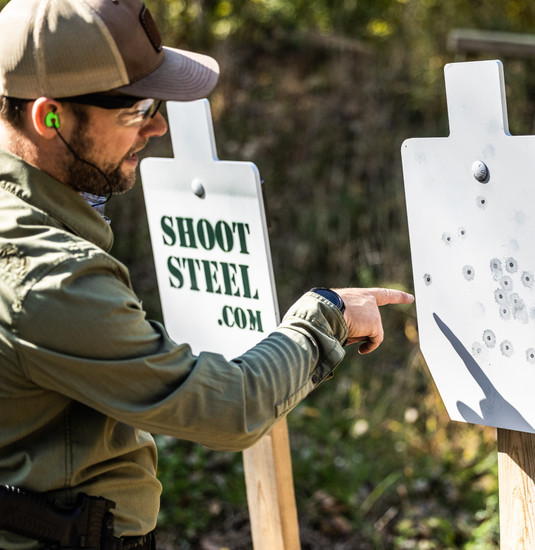
Selecting the right steel target requires balancing three factors: Thickness, Type, and Intended Use. Shooters should select 1/4" AR400 for rimfire/light pistol use, 3/8" AR500 for general pistol and rifle use (up to .308), and 1/2" AR550 for high-velocity magnum rifles or heavy commercial range use.
Steel targets have become the standard for modern training because they offer what paper cannot: durability and immediate auditory feedback. However, buying steel involves more than just picking a shape that looks cool.
If you buy steel that is too thin, you will punch a hole through it. If you buy steel that is too thick, you are wasting money on weight you don't need.
Here is the Shoot Steel 3-Step Guide to buying the right gear the first time.
Step 1: Choose Your Armor (Thickness & Material)
The thickness of the steel dictates what calibers it can withstand. This is a safety issue, so don't skimp here.
- 1/4" AR500 (The Lightweight): Designed strictly for Rimfire (.22LR) and standard Handguns (9mm, .45ACP). Do not shoot centerfire rifles at this thickness. Shop 1/4" Targets
- 3/8" AR500 (The Workhorse): The industry standard. Perfect for almost all pistols and centerfire rifles up to .308 at 100+ yards. If you want one target to do it all, this is it. Shop 3/8" Targets
- 1/2" AR550 (The Tank): Designed for heavy magnum rifles (30-06, .300 Win Mag) or high-volume commercial ranges. The AR550 rating makes it harder and more resistant to pitting from high-velocity rounds (like 5.56). Shop 1/2" Targets
Still unsure? Check our detailed Shooting Guide.
Step 2: Choose Your Mission (Target Type)
Once you know your thickness, you need to pick a shape that matches your training goal.
1. Static Gongs (Precision & Long Range)
What they are: Simple plates with mounting holes hung from chains or straps.
Best For: Long-range rifle work. When you are shooting at 300+ yards, you want a consistent "face" to shoot at. The "ring" is your confirmation.
Recommendation: The 3-Gong Package is the best way to set up a variable distance range instantly.
2. Silhouettes (Tactical & Defensive)
What they are: Targets shaped like a human torso (IPSC/IDPA standards).
Best For: Law Enforcement, Military, and Self-Defense training. They simulate a realistic threat area.
Recommendation: The 1/2″ Short-Range Rifle Target is the gold standard for Close Quarters Battle (CQB) training because it safely deflects spall downwards, allowing for closer engagement.
3. Reactive Poppers (Instant Feedback)
What they are: Targets that fall backward, spring back, or spin when hit.
Best For: "Go/No-Go" drills. In a gunfight or competition, you shoot until the threat is down. Poppers teach you to verify the target is neutralized before moving on.
Recommendation: Auto-Poppers are excellent because they reset themselves—no walking downrange required.
Step 3: Choose Your Difficulty (Size)
Size matters, but smaller is often better for training.
- Beginners (8"-12"): Start large to build confidence and get on paper (or steel) quickly.
- Intermediates (8"-10"): The sweet spot for general-purpose training.
- Experts (4"-6"): "Aim Small, Miss Small." If you can hit a 4" gong at 100 yards, a deer's vital zone will look massive in the field.
Step 4: Logistics (How will you move it?)
Steel is heavy. Before you buy a 125lb system, ask yourself: "Am I leaving this on the range, or putting it in my trunk?"
- For Portable Ranges: Look for our Static Target Stand or T-Post Hangers. These break down into small pieces and utilize wood/posts you can buy on-site.
- For Permanent Ranges: Invest in the Full-Size Texas Star or heavy Gong Stands that can weather the elements year-round.
Ready to choose?
Now that you know the specs, find the target that fits your caliber.